Winter
Do dogs need boots in winter? An honest answer
Not every dog needs them. Here's exactly when boots help, when they don't, and what makes a pair stay on.
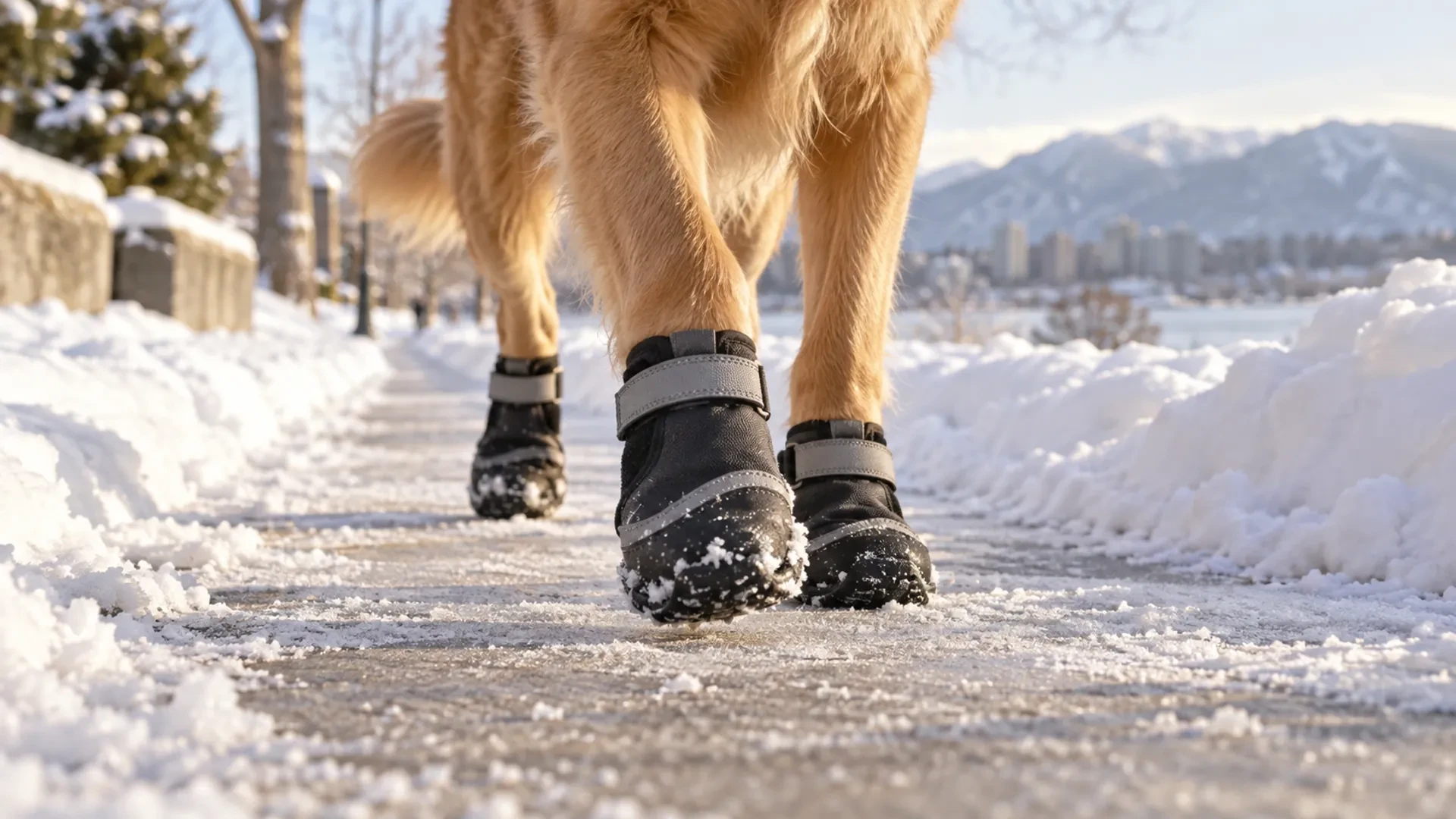
AI-generated illustration. Product photos on our product pages are real photos of what ships.
The short answer
- Boots matter most for city dogs on salted sidewalks, dogs that get ice balls between their toes, and seniors.
- Dogs walking mostly on snowy trails or grass may be fine without them.
- A good winter boot has a rubber sole, a waterproof upper and a strap that closes above the dewclaw.
- Size by paw width, measured standing, not by weight.
On this page (5 sections)
Dogs that genuinely benefit from boots
| Situation | Why boots help |
|---|---|
| City sidewalks with road salt | Salt dries, cracks and can burn pads, and dogs lick it off at home |
| Furry feet that collect ice balls | Snow packs between the toes into painful lumps of ice |
| Long walks below about −10°C | Pads get very cold on frozen ground over time |
| Senior dogs, or dogs with sore joints | Rubber soles give grip on ice and slippery floors |
| Cut, cracked or healing pads | Keeps the wound clean and dry |
Dogs that are often fine without
What makes a good winter boot
- Rubber sole with tread. For grip on packed snow and ice, and so salt can't soak through.
- Waterproof upper. Slush gets everywhere. Fabric that soaks through means cold, wet paws.
- A strap above the dewclaw. That's the narrow point of the leg, where a boot can hold without sliding.
- Reflective strips. Most winter walks are in the dark.
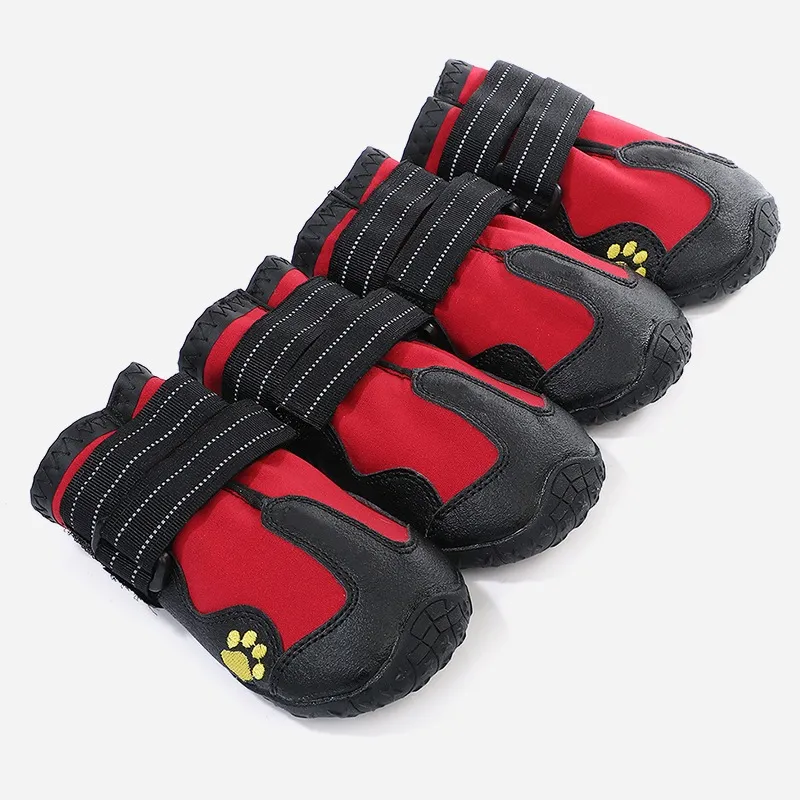
- Sold as a set of four. Front and back paws both take the salt.
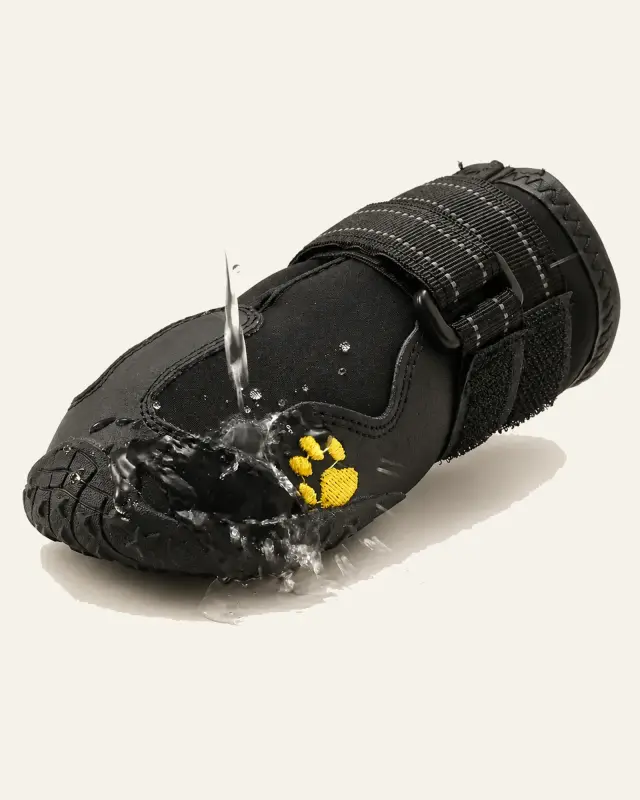 In our shopSlush-Proof Dog BootsRubber soles, water-resistant upper, reflective straps, sold as a set of four.$64.00Shop
Getting the size right
- 1Stand your dog on a sheet of paper with their weight on the paw (standing, not sitting).
- 2Mark the widest points on either side of the front paw.
- 3Measure the distance and compare it with the size chart. If you're between sizes, size up.
- 4Measure both front paws and use the larger one.
The first walks
Questions people ask
Are dog boots bad for dogs?
Why does my dog walk funny in boots?
How do I keep dog boots from falling off?
Should dogs wear boots all day?
Sources we checked
- AKC: Choosing the right dog boots or shoes
- CBC News: Why ice salt can be toxic for your pet (vet advice on washing paws and boots)
Written by Northern Wag in Calgary and checked against the sources above. This is general information, not veterinary advice: if you're worried about your dog, call your vet.
Keep reading
All guides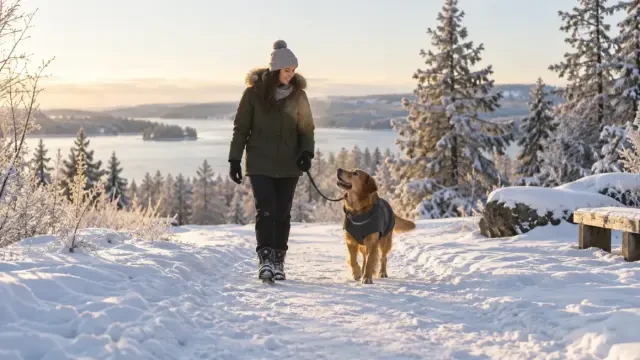
Winter5 min read
How cold is too cold to walk your dog? A Celsius guide for Canadian winters
A feels-like chart in Celsius for every size of dog, the signs it's time to turn around, and what actually buys you more time outside.
Winter4 min read
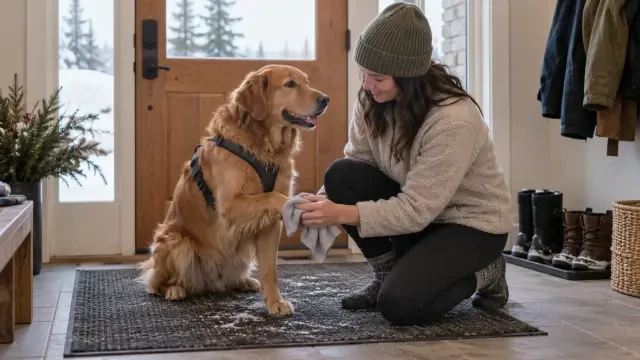
Road salt and your dog's paws: what it does and how to protect them
Why de-icing salt burns paw pads, why the licking matters as much as the walking, and a two-minute routine that fixes most of it.

Winter3 min read
Keeping small dogs warm in a Canadian winter
Why small dogs get cold so fast, how short walks should be, snowsuit vs jacket, and tips for the coldest weeks.