Home & enrichment
Dogs scared of fireworks and thunderstorms: a calm plan for Canada Day and storm season
A safe room, a pre-dark walk, something to lick and chew, and a longer-term plan. Here's how to get through fireworks nights.
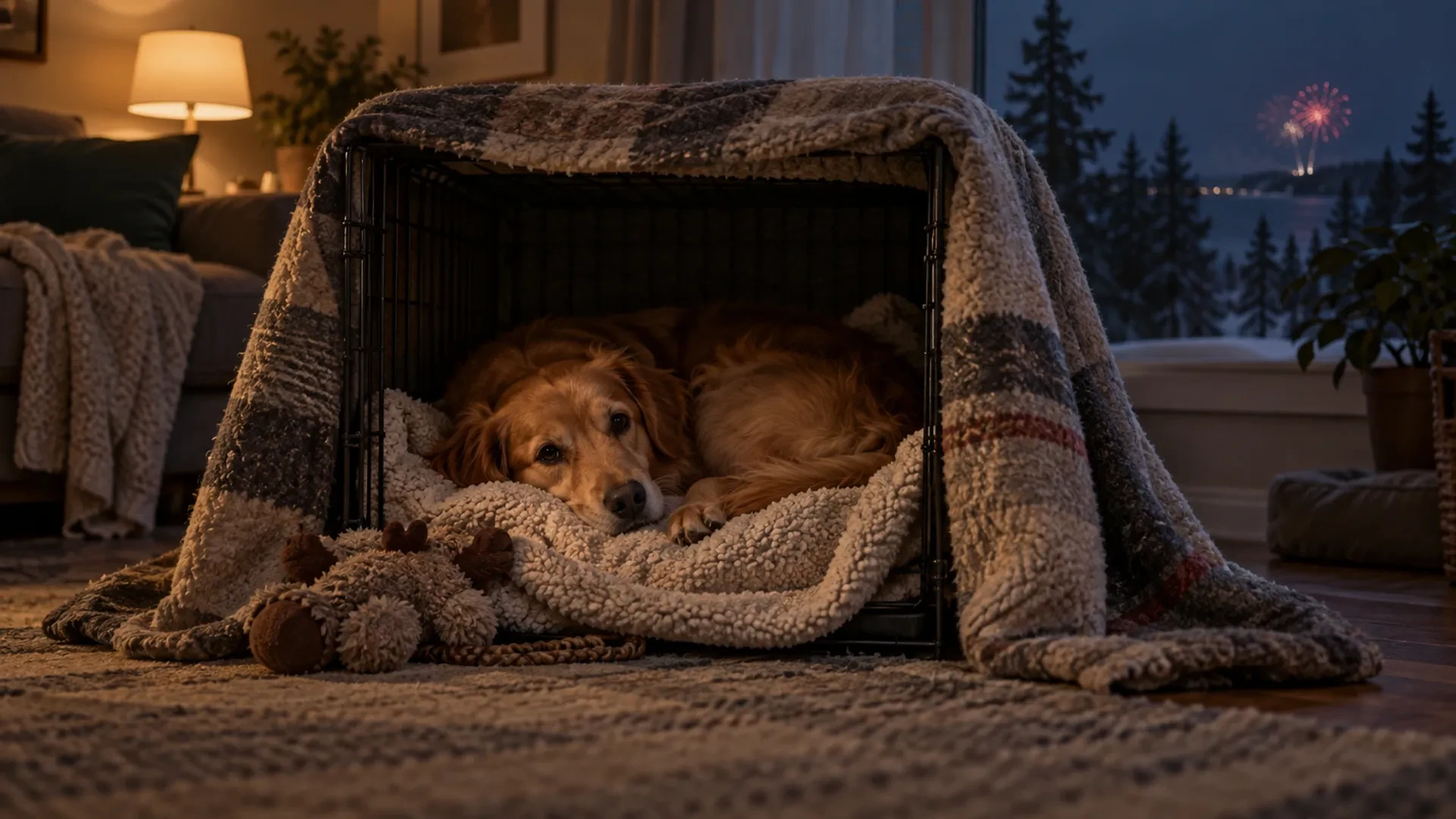
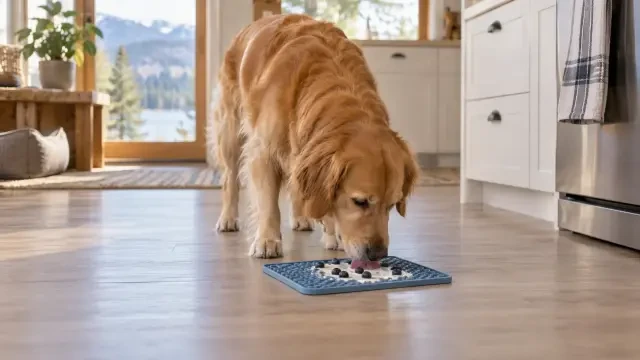
AI-generated illustration. Product photos on our product pages are real photos of what ships.
The short answer
- Walk your dog before dark on fireworks nights and keep them indoors once it starts.
- Set up a quiet 'den' with the curtains closed and background noise on, and let your dog hide if they want to.
- Comforting a frightened dog is fine. Punishing fear makes it worse.
- Check ID tags and microchip details beforehand, because scared dogs bolt. For severe fear, talk to your vet well before the date.
On this page (3 sections)
Before the night
- Check ID: a tag with your phone number, and up-to-date microchip details.
- Check the gear: a well-fitted harness is harder to slip out of than a loose collar.
- Plan a tired dog: a long walk and a sniff-heavy game earlier in the day.
- Book the vet a few weeks ahead if your dog panics (pacing, trembling, drooling, trying to escape).
- Stock up on a long-lasting chew or a lick mat to fill.
On the night
- 1Walk before dark, on leash, even in your own yard. Fireworks start early.
- 2Close windows, curtains and blinds to cut noise and flashes.
- 3Turn on background sound: TV, radio, a fan or white noise.
- 4Set up a den: a crate with a blanket over it, a closet or a quiet bathroom with their bed. Let them choose where to hide.
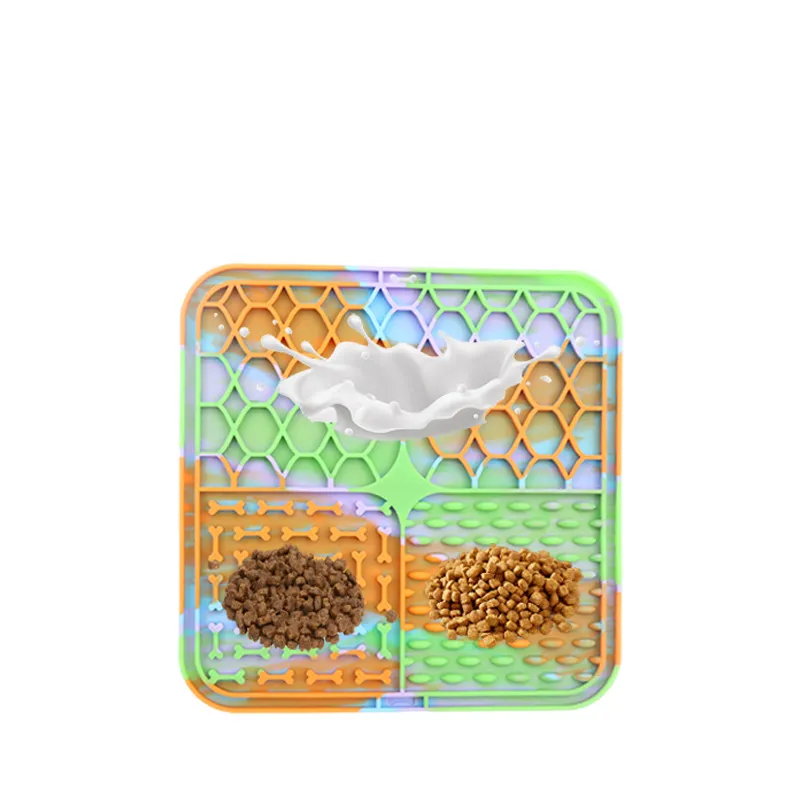
- 5Offer something to lick or chew. Licking is naturally calming for many dogs.
- 6Stay home if you can, and stay calm yourself.
 In our shopCalm Lick MatSpread with plain yogurt or wet food and stick it to a tile or crate side with the suction cups. Slow licking keeps them busy.$19.00Shop
The long game: desensitization
- 1Play a recording of fireworks or thunder very quietly, low enough that your dog notices but stays relaxed.
- 2Pair it with something great: treats, a meal, a favourite game.
- 3Over days and weeks, slowly raise the volume, always staying below the level that worries them.



Questions people ask
Does comforting my dog reward the fear?
Should I give my dog medication for fireworks?
Do anxiety vests work?
Sources we checked
- Cornell Riney Canine Health Center: Fireworks fears? Tips to protect your pets
- VCA Animal Hospitals: Treating fear of storms and fireworks in dogs
- UW School of Veterinary Medicine: Help Fido through thunderstorms, fireworks and other noise phobias
Written by Northern Wag in Calgary and checked against the sources above. This is general information, not veterinary advice: if you're worried about your dog, call your vet.
Keep reading
All guides
Home & enrichment3 min read
12 indoor games for dogs on cold days (that actually tire them out)
When walks are short, these sniffing, licking, chewing and training games burn energy indoors. Most need nothing but treats.
Home & enrichment3 min read
Lick mat ideas: 10 dog-safe fillings, freezing tips and what to avoid
Ten safe fillings, how to freeze them for longer sessions, using a lick mat for nail trims and baths, and what never to use.

Winter4 min read
Your puppy's first winter: a checklist for Canadian owners
House training in the snow, how long puppies can be out in the cold, gear for growing dogs, and indoor ways to tire them out.